
Written by Pratistha Rai
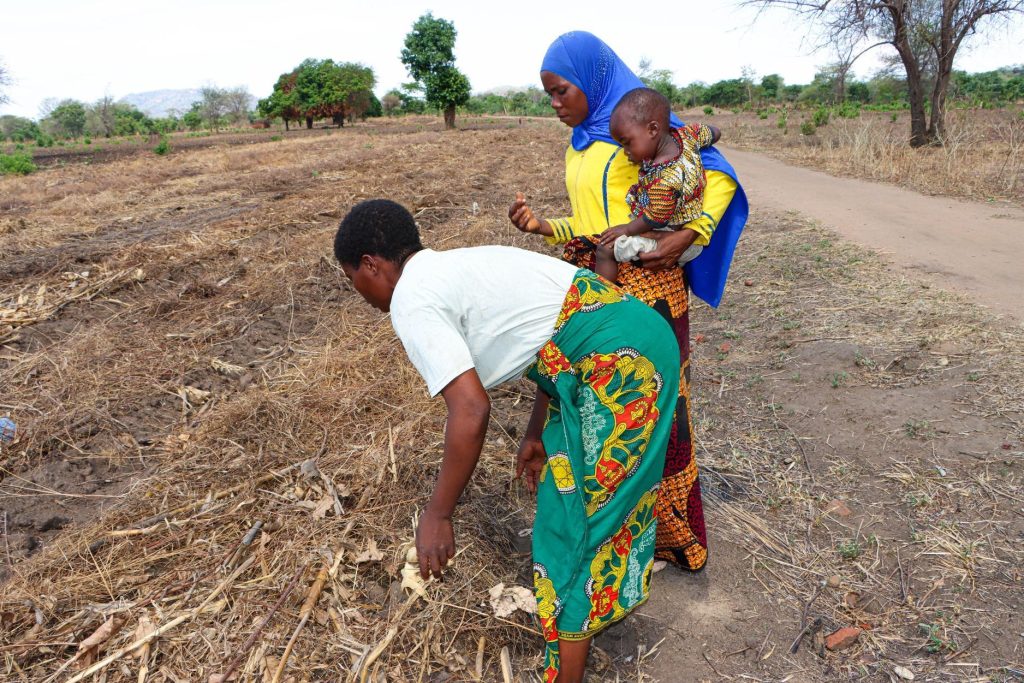
Being a seasoned subsistence farmer who has been in the farming trade for over a decade, Chrissy knew there was something she was doing wrong. Her crop production was always low – her one-acre maize field was hampered by inconsistent harvests. During the best harvests, she would get eight bags; otherwise, the expected amount Chrissy harvested every season was a mere four bags of maize. Chrissy could not pinpoint what the problem was, and this frustrated her. She and her family relied on that maize field as their main source of food.
Chrissy needed a stable maize harvest each year to ensure adequate food for her family, which includes six children. In Malawi, maize is a staple grain that households consume as the main food source. Unreliable access to maize means a disruption in food security for the household. That is the predicament that Chrissy and her home faced. When Chrissy’s house ran out of maize, she would need money to buy more. Therein lay another problem; in Chrissy’s village, maize is expensive.
“Here in the village, maize is sold in small 5 litre buckets. A bucket costs four thousand Kwacha,” said Chrissy. That is not a meagre sum of money for someone who is unemployed and solely relies on erratic subsistence farming to make ends meet. Besides, Chrissy comes from a district with the highest rates of poverty, and where 78 out of every 100 individuals are multidimensionally poor.
Chrissy’s only hope of boosting her food security was to revive her failing maize yields and increase harvests, although she had no idea how to do that.
Welthungerhilfe (WHH) Malawi in partnership with Kusamala Institute of Agriculture and Ecology (KIAE) identified several households in Juma M’banga village in Mangochi district to participate in a three-day training on permaculture and sustainable agriculture. This is part of a global project titled Nutrition Smart Community which WHH and KIAE are implementing in Malawi, with funding from the Federal Ministry for Economic Cooperation and Development (BMZ). Chrissy was among the selected women who attended the training.
The short but comprehensive training introduced Chrissy to resilient methods of agriculture including the basics of permaculture, and agroecology.
“I learned the modern agricultural methods of creating maize ridges that retain enough moisture to improve plant growth. I also learned how to make organic fertilizer using droppings from livestock,” Chrissy beamed. The training gave her new knowledge and made her aware of better techniques of agriculture covering the entire process, starting from preparation of ridges, planting, and preservation of water. Armed with the new skills, Chrissy now has what it takes to boost her crop production and harvest bumper yields.
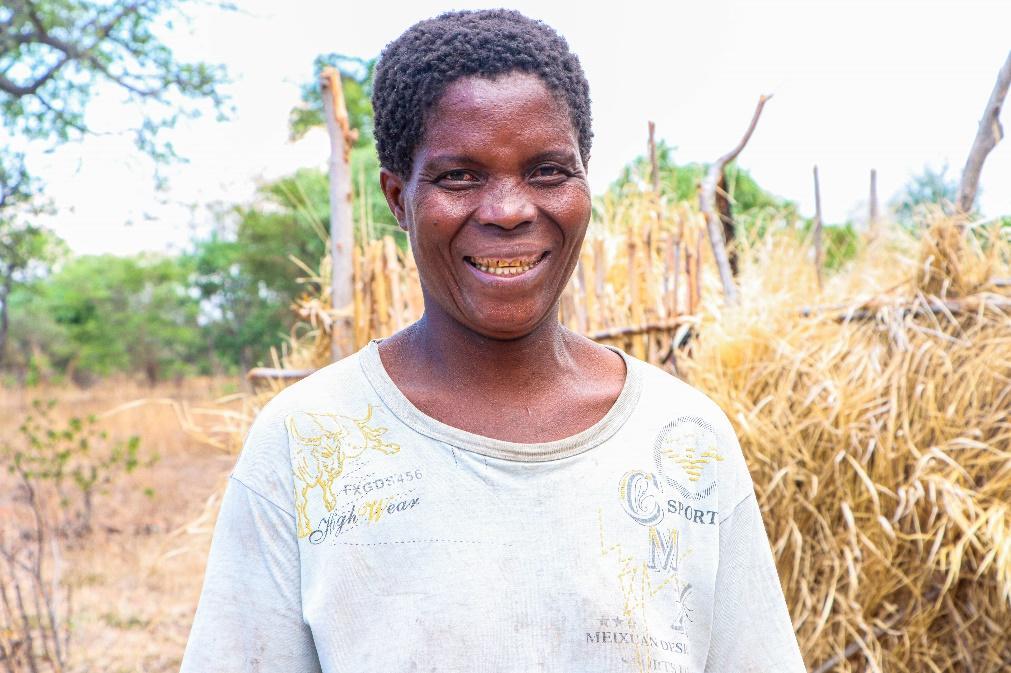
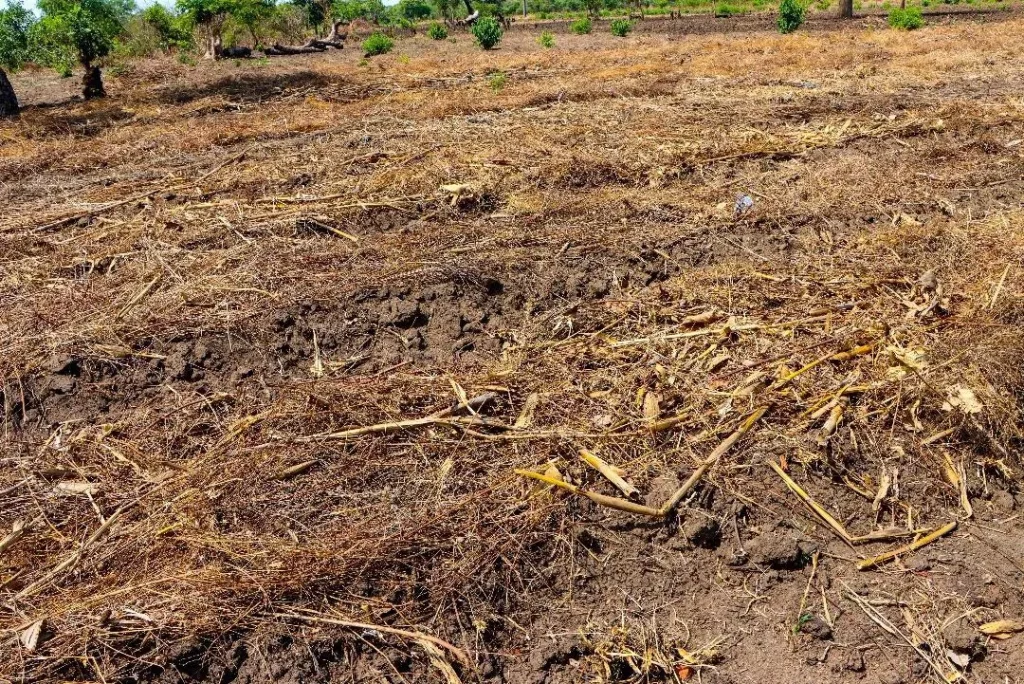
Chrissy has just completed preparing her maize field and once the rains come, which is in the next few days, she will begin planting her maize. What is different this time is that she has used the knowledge she gained to guide her. She is confident that next year when her maize matures, she will harvest around 20 bags of maize. This is multiple times what she initially harvested on the same piece of land, when previously she would get a mere eight bags or less. o help in enhancing her crop production, the project donated Open Pollinated Variety (OPV) maize seeds to Chrissy and a group of other people who are part of the project. These are high quality resistant maize seed variety that can be replanted as seed for up to three years. They also mature early and are tolerant to diseases. Chrissy received a 5 kilogramme packet of the high yielding maize seeds to use in her field. Her excitement is profound.
“I cannot wait to bid hunger and poverty farewell. I am very sure that I will get twenty bags. I know my family will not suffer again,” she predicts. She expects to have sufficient maize and some surplus which will last her household the entire year. This is a big break for her household that has struggled considerably with food insecurity. Chrissy also plans to sell the surplus maize to make an additional income to support her husband at home.
Chrissy does not even need to worry about purchasing expensive fertilizer because this time, she has gone organic in her maize field. She has applied manure that she made at home using droppings from the chickens that she rears at home, and other readily available raw materials from natural resources. Prices of fertilizers in Malawi are unreasonably high and continue to fluctuate. At the local trading centre in Chrissy’s village, a 50 kilogramme bag of fertilizer costs 117,000 Kwacha (approximately 64 Euros). Chrissy cannot afford that exorbitant price, and her new-found skills in making organic manure have saved the day.
Chrissy is looking forward to better days ahead. She expects big gains and high yields. She is patiently waiting for improved food security and stable crop production. This growing season when she is planting her maize, she will do so with enthusiasm knowing fully well that her efforts will pay off handsomely.