
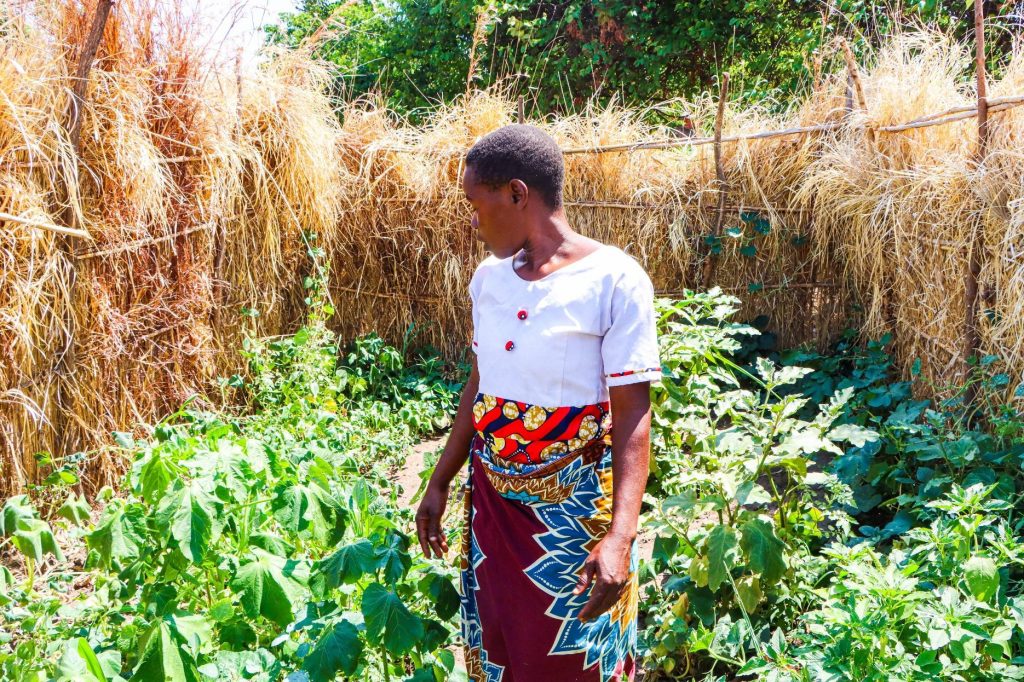
Doreen Tambula grew up in a village where the idea of owning a backyard vegetable garden was hardly prioritized. Like any everyday woman in Juma M’banga village where Doreen resides, Doreen preferred to buy her vegetables from the local market. On average Doreen, a married mother of five, would spend around 500 Kwacha a day to buy vegetables that were sufficient to cater for her big family. That means each month, Doreen’s household spent around 14 thousand Kwacha (roughly 8 Euro) on vegetables alone. For someone staying in a typical village, this was a large sum of money and the expenditure put a dent in the household’s finances. Doreen’s village is located deep in the rural setting of Mangochi district in southern Malawi. According to her, poverty in this village is rampant and most of the people can barely afford even one meal a day.
Doreen and her husband are among the households who struggle to make ends meet. Due to a limitation in finances, on some days Doreen could not even source the 500 Kwacha to buy vegetables.
“I know it sounds unreal but that is the reality my household faced,” Doreen said. It is a strange story that Doreen now finds amusing when she reminisces about it. Unknown to her, the small patch of land that stretches a few metres just behind her house would play a role in changing the narrative. It all began early this year when Doreen heard that some officials from a local non-governmental organization were looking for people who were interested in undergoing training in permaculture. What piqued Doreen’s interest was that the training was part of a larger agenda of assisting rural households to improve food and nutrition security.
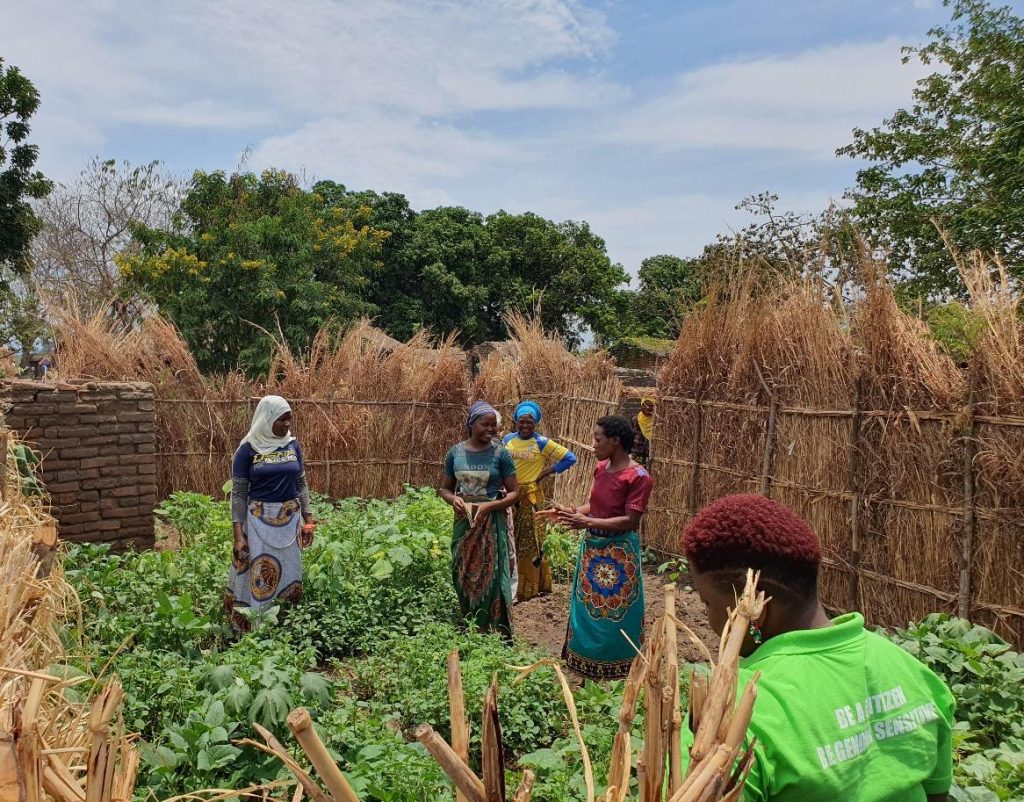
The training was implemented as part of a project led by Kusamala Institute of Agriculture and Ecology (KIAE) in partnership with Welthungerhilfe Malawi and financed by the Federal Ministry for Economic Cooperation and Development (BMZ). The project forms part of a global programme called the Nutrition Smart Community.
Doreen and a group of other women went through a 3-day intensive training in various aspects of agriculture including permaculture, and livestock management. It was the permaculture part that opened Doreen’s eyes to a whole new dimension of backyard vegetable gardening.
“We learned how to make a good vegetable bed which preserves water and moisture. We were also taught the different types of vegetable beds, and which one to use depending on the nature of the soil,” Doreen recalled. This rare knowledge – previously alien to her – showed Doreen how wasteful she had been by buying vegetables when she had the resources needed to own her own vegetable garden. So, as soon as she completed the training, Doreen went straight to work and, with the help of her husband, they turned the small patch of land at the back of their house into a beautiful vegetable garden. To keep the garden safe from predators and intruders, Doreen reinforced it with a simple fence made of dry grass.
Doreen planted a variety of legumes and nutritious vegetables such as okra, pumpkin leaves, pepper, beans, amaranth, and Corchorus. These vegetables were not just randomly selected.
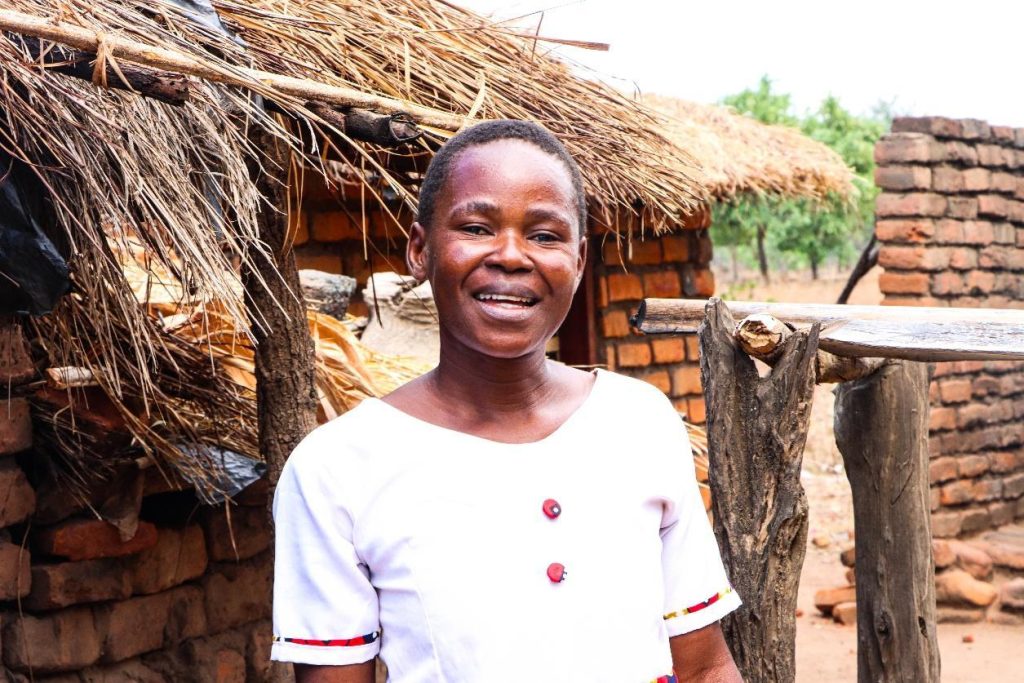
“Some of these vegetables preserve moisture by covering the ground with their broad leaves, others are important in revitalizing fertility while I planted pepper to keep away pests,” Doreen clarified. The ground cover provided by the vegetables allows the beds to hold enough moisture to allow the plants to survive the dry soils that are a common sight in the village.
The small backyard garden is already proving to be a worthy investment. It has helped Doreen to save the money that she was using to buy vegetables. She is able to put the saved income to use to cater for other essential day to day needs that her household requires. Most importantly, the garden has turned into an alternative income stream for Doreen and her family because she also sells some of the vegetables to her neighbours. Using the money from the sales, Doreen can now buy extra food items such as fish and eggs and other essentials like soap and sugar.
The garden is not only benefiting Doreen’s household; it is also providing for the homes of her friends and relatives in times of need. When her peers and relatives are lacking meals at home, they visit Doreen who gives them access to the garden to pluck some vegetables. Her selfless kindness is strengthening the bond between Doreen and her fellow villagers.
Doreen has also inspired other community members to adopt the practice. Her neighbours were so impressed with Doreen’s backyard garden that they asked her to teach them the art – which Doreen happily did. The neighbours have set up their own gardens in their homesteads, further replicating the success within the village.
Apart from being trained in permaculture, Doreen received guava, mango, and Mexican apple fruit trees, courtesy of the project, which she has planted at her house. These hybrid fruit trees are fast growing, and it will not be long until the trees start bearing fruits. Doreen hopes that she will be able to sell the fruits as an additional income stream.
Doreen’s story is testimony of how a homestead veggie garden can bring big wins to a home and the larger community.